
“Magical” Movements
(Excerpt from Arrow Journal)

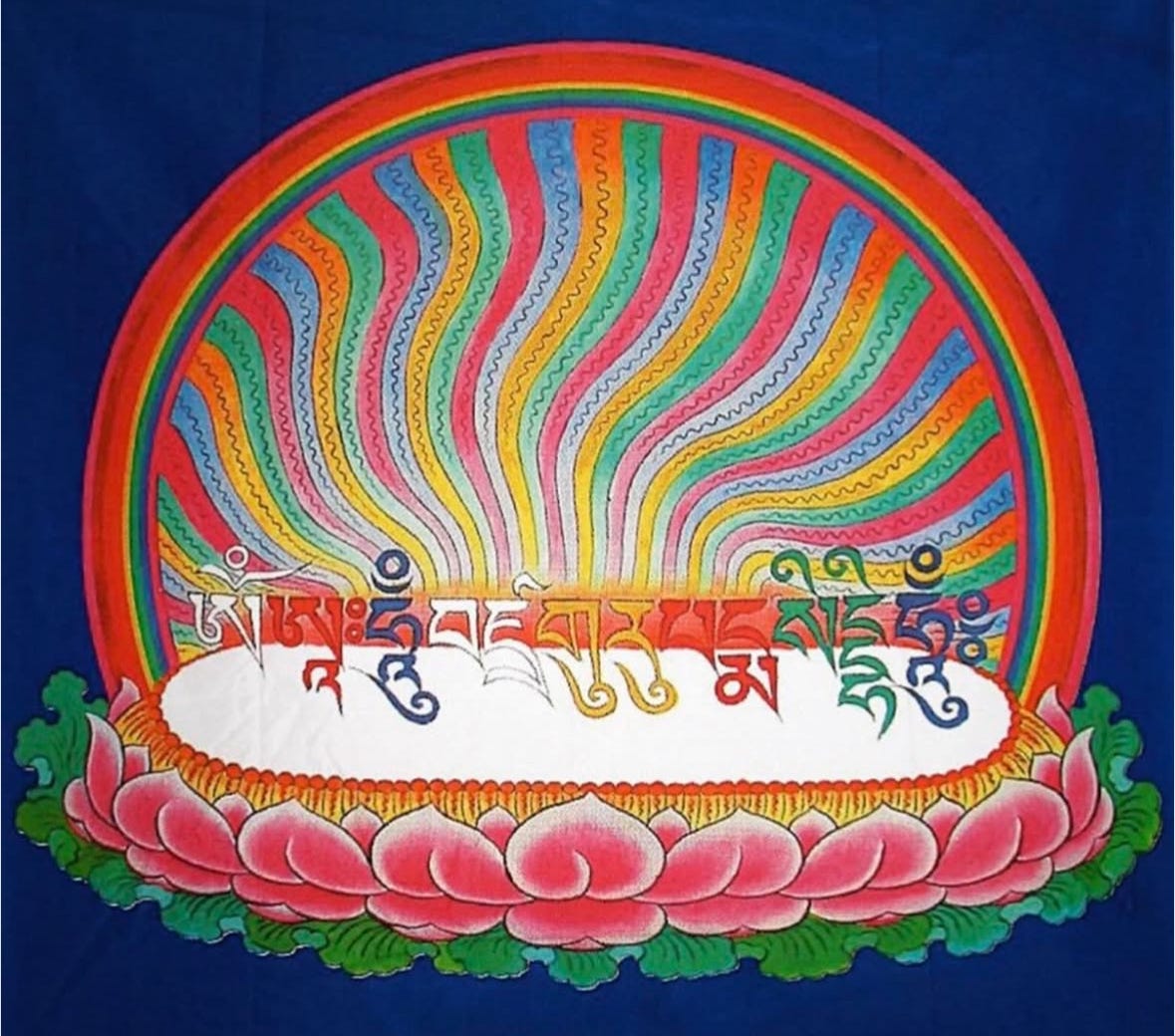
MAGICAL
Tsalung trulkhor have a wondrous or magical way of exposing this hidden reservoir—an intrinsic mandala.
Part of this magic also involves lineage and transmission. Lineage is an experience of connection to a living, embodied wisdom and source of blessings. For many a traditional Buddhist practitioner, these “lineage-based” practices offer a mindbody discipline that is in alignment with their religious ideals and convictions.
The transmission of embodied wisdom is central to the practice of tsalung. This connection is engendered in every breath and every practice session. Attention to details such as the quality of movement, delicacy in hand gestures as well as fierce emotion, nuances of visualization, the cadence of movement and arresting of the inner breath—all of these “somatic modes of attention” and action may be highly ritualized. As one practices tsalung trulkhor, we cultivate embodied states of compassion, loving kindness, including nonconceptual and even ecstatic states.
When we learn movements, or apply what are referred to as the key points of body, speech and mind, initially we are aligning with a body of experience that is exposed to us through these “orientations.” For instance, the key point of the body (lu ngad) involves instructions that allow the vital energy to flow through channels. Together, with methods of the subtle breath and mind we cultivate these three gateways (body, speech and mind) to arrive at an experi- ence of embodiment in which the full potential of these avenues is uncovered.
Later, it is like a dance. It is said in Vajrayana that all movements are ges- tures, all sounds and breath are mantra, and all thoughts like reverberations of a vast expanse, which we refer to as mind’s nature. Would you embellish movements, or maintain the form and structure of these bodily practices of tsalung trulkhor?
When learning, we connect with movements that are often structured around internal processes of meditation, visualization and feeling. In Tibetan parlance, meditation is spoken of as “gom” which translates as familiarization. In these somatic or embodied forms of meditation (”embodied” including but also beyond movement), we begin to familiarize ourselves with a more pro- found sense of body, speech and mind. Rather than disparate aspects of our being, they are composite and referred to as “three vajras”—that is, there is a vision of wholeness rather separateness that we become acquainted to through tsalung trulkhor. When we move, we dance this lived experience of sacredness and unification.
On a relative level, training in tsalung trulkhor clears obstacles to medita- tion and contemplative insight. The channels, winds and vital essenes are pu- rified and transformed. Vitality is increased, and the once dysregulated winds are controlled and brought into the central channel, which naturally gives rise to stability, clarity and joy, as well as the reduction of illnesses and disease.
In time, the body itself is experienced as an intrinsic mandala, and proverbially the meditation practitioner moves beyond the distinctions between stillness and movement, and form and emptiness.
Most importantly, Trulkhor are magical because they give rise to devotion, love and compassion in the body, which we can relate to in terms of resilience, empowerment and connection.